
When Love is Real, but the Relationship Still has to End…
Can you deeply love someone and still choose to leave the relationship?
In this article, former family lawyer and amicable separation specialist Kara Ockendon, explores the similar but often very different experiences on either side of a break-up including grief, anger, guilt and the meanings we make from loss — and why initiating a separation does not necessarily mean the love wasn't real.

One Question That Can Turn Conflict Around
Conflict can become entrenched when we make assumptions about what is driving another person's position.
But what happens when we stop assuming and simply ask what they actually need?
This article explores how looking beneath positions to understand the physical, practical and emotional needs driving them can open up different conversations, different solutions and potentially very different outcomes in separation.
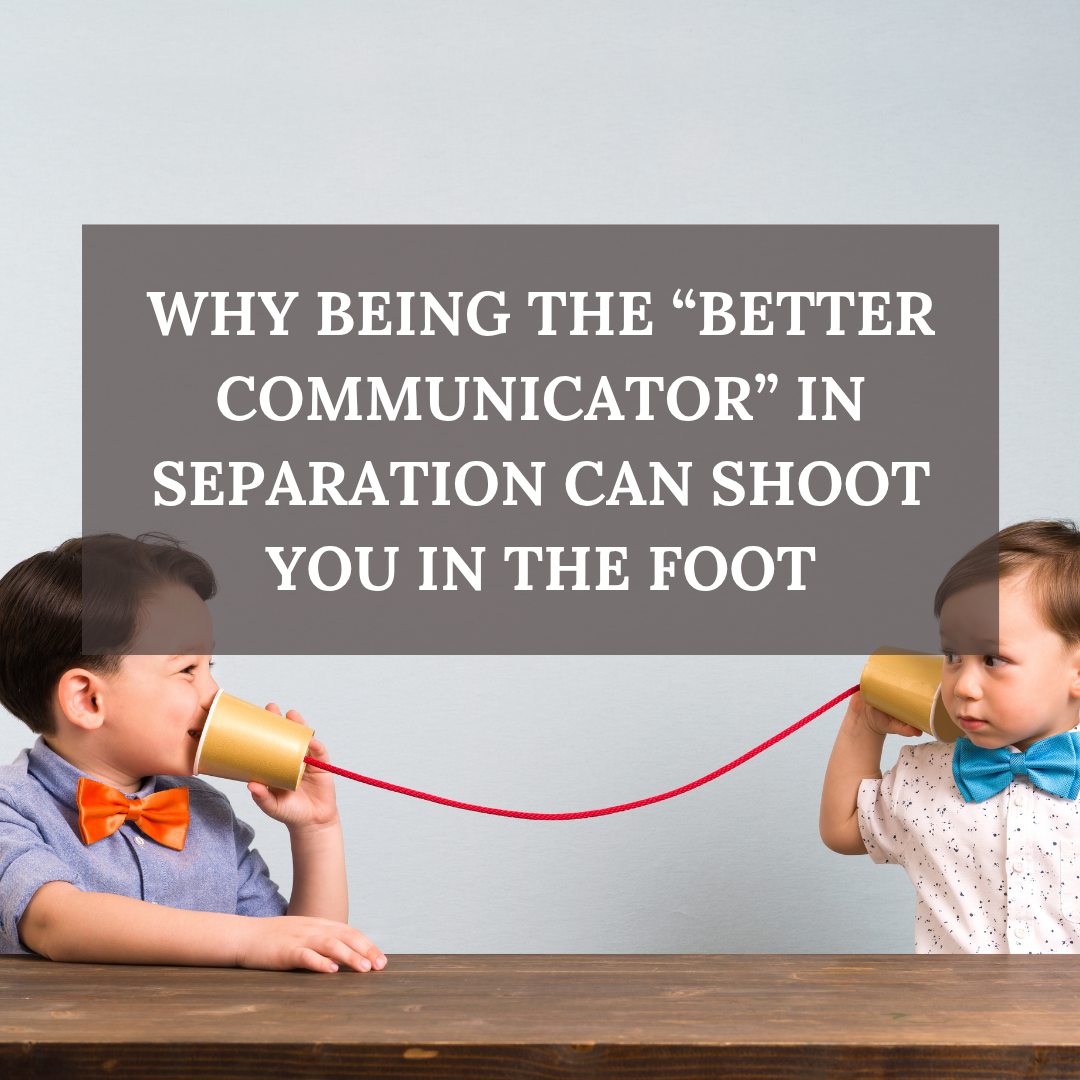
Why Being the "Better Communicator" in Separation can Shoot you in the Foot!
Many of us believe we communicate well and that when communication breaks down, the problem lies with the other person.
But what if our belief that we are the “better communicator” is actually getting in the way?
This article explores three reasons we can genuinely believe we are communicating effectively, while still unintentionally contributing to conflict, and why curiosity about our own communication may be one of the most valuable skills we can develop.

When Reassurance Doesn’t Land in Separation & Divorce
Why does reassurance sometimes seem to make things worse instead of better?
During separation, emotions run high and well-intentioned reassurance can easily miss the mark. In this article, Kara Ockendon explores why validation, curiosity, and attunement are often far more effective than trying to fix someone's feelings, and how understanding the difference can reduce conflict and strengthen communication during separation.
Safety Comes First in Separation - And Nuance Still Matters
Safety must always come first in separation and divorce. But where it is safe to do so, nuance matters too.
In this article, Kara Ockendon explores why understanding the context behind behaviour does not excuse harm, how safety and nuance can coexist, and why both are essential to reducing conflict and creating healthier outcomes for separating families.
From Survival to Stability: How Divorce Coaching Supports Better Decisions in Separation
Separation often places people into survival mode, making it difficult to think clearly or make wise decisions about the future. In this article, Kara Ockendon — former family lawyer and Collaborative Family Law Facilitator — explores why divorce coaching can help individuals navigate separation with greater clarity, less conflict, and better long-term outcomes for themselves and their families
Betrayal Trauma & Separation: Why Time, Space and Support Matter
Betrayal can make separation feel overwhelming, leaving individuals and families struggling to know what to do next.
In this article, Kara Ockendon explores how betrayal trauma impacts decision-making during separation, why time, space and therapeutic support matter, and how a collaborative therapeutic separation can help couples reduce conflict, protect children, and make wiser decisions about the future of their relationship.

Understanding the Priority Property Pool Case Model: A Simpler Court Pathway for Financial Separation with a Collaborative Touch
Many separating individuals assume that once Court proceedings begin, collaboration is no longer possible. In reality, this is often not the case.
This article explores the Priority Property Pool Case (PPP Case) model - a more streamlined Court pathway designed for smaller and less complex financial separation matters - and how conscious and collaborative approaches can still remain relevant throughout legal processes.
Learn who may be eligible, how the process works and why reducing unnecessary conflict, delay, and overwhelm still matters even within the Court system.

Living Together Separated Under One Roof: 3 Tips to Make It Work For Your Family
Living together separated under one roof is becoming increasingly common amidst rising housing costs and changing family dynamics.
In this article, Kara Ockendon shares practical insights based upon professional and lived experience around navigating separation under one roof more consciously, including emotional regulation, healthy boundaries, communication, expectations, and reducing conflict during this deeply human transition.
Avoiding Post-Separation Conflict: The Real Mistakes That Keep You Stuck - And How to Change it!
Separation can feel like conflict is happening to you.
Communication breaks down. Emotions run high. The other person’s behaviour can feel unpredictable, reactive, or even unsafe.
But in my experience, much of the conflict that escalates during separation isn’t inevitable.
It’s driven by patterns — many of which sit within your awareness and influence.
In this article, I explore the most common mistakes that fuel post-separation conflict, from making decisions while dysregulated to rushing outcomes just to escape discomfort.
More importantly, I share what actually changes it.
Because avoiding conflict isn’t the goal.
Navigating it well is.
Why Even the "Strongest" Relationships Can Fall into Conflict in Separation
Healthy, secure relationships aren’t defined by the absence of conflict… and neither are healthy separations.
In this article, Kara Ockendon - Collaborative Family Law Facilitator & Coach, explores why even the strongest relationships can fall into conflict during separation, how patterns under pressure shape outcomes, and why awareness is the first step to navigating separation more consciously.

Apologies vs Connection in Conflict: Why “I’m Sorry” Isn’t So Critical to Conflict Repair
Many of us were taught that saying “sorry” is what repairs conflict. But what if real repair isn’t about apology at all?
In this article, Collaborative Family Law Facilitator - Kara Ockendon, explores why apologies alone often fail to create meaningful change, why apologies are not always necessary and how true repair comes through recognising impact, taking aligned action, and choosing connection over being right
Why you Ex Made you the "Bad Guy": Understanding Blame After Relationship Breakdown
Blame and shame are incredibly common when relationships break down.
Many people believe this happens because they’ve finally “seen the truth” about the person they were with.
Sometimes that’s true.
But more often, the real reason is far more complex and a lot more human.
In this article, Kara Ockendon explores how the nervous system responds to breakups, why blame and projection are common, and how conscious uncoupling can help people move through separation with greater awareness, accountability, and growth.
When Mental Health Meets Co-Parenting: Why Collaboration Matters More Than Conflict
When mental health challenges arise after separation, many parents are advised to go straight to court. But what if collaboration could lead to better outcomes for everyone involved?
In this case study, Kara Ockendon explores how conscious co-parenting, transparency, and compassion can support children, preserve dignity, and stabilise families during a mental health crisis.
Why a 70/30 Split Isn’t About “Fairness”: Looking Beyond Percentages in Separation
Shock and anger often follow when someone hears “70/30” in financial separation. It can feel unfair, greedy, or unjust at first glance.
But separation is rarely about simple percentages.
In this article, Kara Ockendon explores why focusing on future needs and outcomes, leads to more stable, sustainable outcomes for separating families. Drawing on both collaborative practice and the legal principles embedded in Section 75(2) of the Family Law Act 1975, she explains why unequal splits such as 65/35 or 70/30 are sometimes not only reasonable, but necessary to support long-term financial security, dignity, and wellbeing for all members of the family.
Because fair isn’t always equal and equal isn’t always sustainable.

Refinancing After Separation: What You Need to Know Before Property Settlement
Refinancing after separation is not just a banking step, it’s often the financial hinge point that determines whether a proposed property settlement is actually achievable. In this guest article, mortgage broker Zoe Kowalski of MLN Finance explains why refinance planning needs to happen before agreements are signed, the common pitfalls separating families face, and how early financial clarity can prevent costly surprises, forced sales, and prolonged uncertainty.
This piece explores what lenders really assess post-separation, how parenting arrangements and settlement structures impact borrowing capacity, and why collaborative, early-stage planning leads to more stable and sustainable outcomes for separating families.
Why Focusing on Percentages Can Derail a “Just and Equitable” Outcome Post Separation or Divorce
Why do so many property settlements post separation or divorce become stuck or unnecessarily conflict-driven?
In this article, Collaborative Family Law Facilitator and Coach - Kara Ockendon, explores what is often a common but costly misstep in financial separation: focusing on percentage splits too early. Drawing on a recent conversation with a family lawyer and grounded in the Family Law Act 1975, she unpacks why practical impact — not entitlement — is often the correct starting point for achieving outcomes that are genuinely just, equitable, and sustainable for separating families.

Tips for Surviving Christmas Amidst Separation & Divorce
Christmas can amplify everything, grief, guilt, fear, and longing, especially when families are navigating separation or divorce. If this season feels heavier than you expected, you’re not alone.
In this piece, I explore why Christmas can be so emotionally charged after separation, how families don’t have to be “broken” post-divorce, and why there is no single right way to co-parent or celebrate.
And if this Christmas has highlighted patterns you don’t want to carry into another year, know that change is possible and support is available.